Subtotal: ₹0
The wastage disposing system
There is no factory which can manufacture a product without generating any waste. This is true of our body which is a cellular factory too. And for other organisms as well. Wastes are generated at regular intervals from
the bodies of most organisms.
In human beings excretion mainly occurs through a urinary or excretory system consisting of a pair of kidneys, a pair of ureters, urinary bladder and urethra
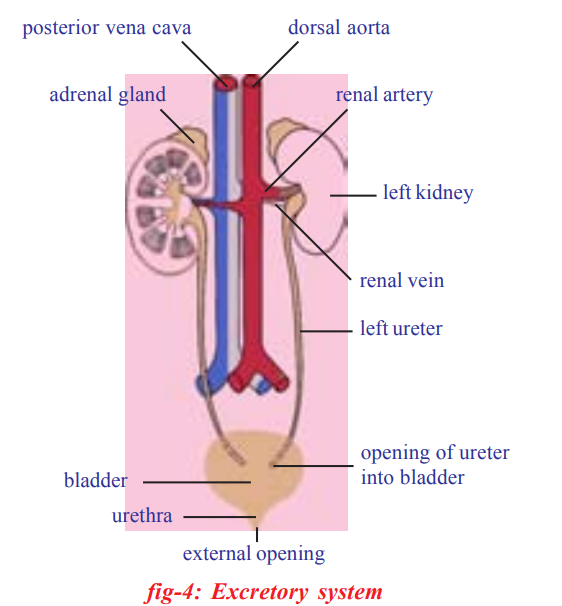
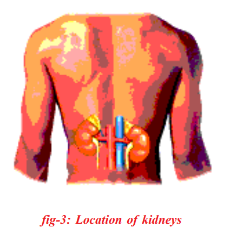
In Human being there are a pair of bean-shaped, reddish brown structures in the abdominal cavity attached to dorsal body wall one on either side of the back bone. The right kidney is placed slightly lower than the left kidney
The size of the kidney is 10 cm in length, 5-6 cm in breadth, and 4 cm in thickness. Each kidney is convex on the outer side and concave on the inner side. The position of the right kidney is lower than the left kidney
due to the presence of liver above.
Let us observe L.S of the kidney to know more about the internal structure. It shows two distinct regions. Dark colored outer zone called the cortex and pale inner zone called medulla.
Each nephron has basically two parts. One is the malpighian body and other is renal tubule.
Malpighian body: It consists of a blind cup-shaped broader end of nephron called Bowman’s capsule and a bunch of fine blood capillaries called glomerulus.
The Bowman’s capsule and glomerulus together called Malpighian capsule or renal capsule. Glomerulus develops from afferent arteriole. It gives rise to an efferent arteriole.
Renal tubule: It has three parts. First or proximal convoluted tubule (PCT),
loop of Henle, which is U shaped, second or distal convoluted tubule (DCT).



 */ ?>
*/ ?>
0 Doubts's